Back to the Field
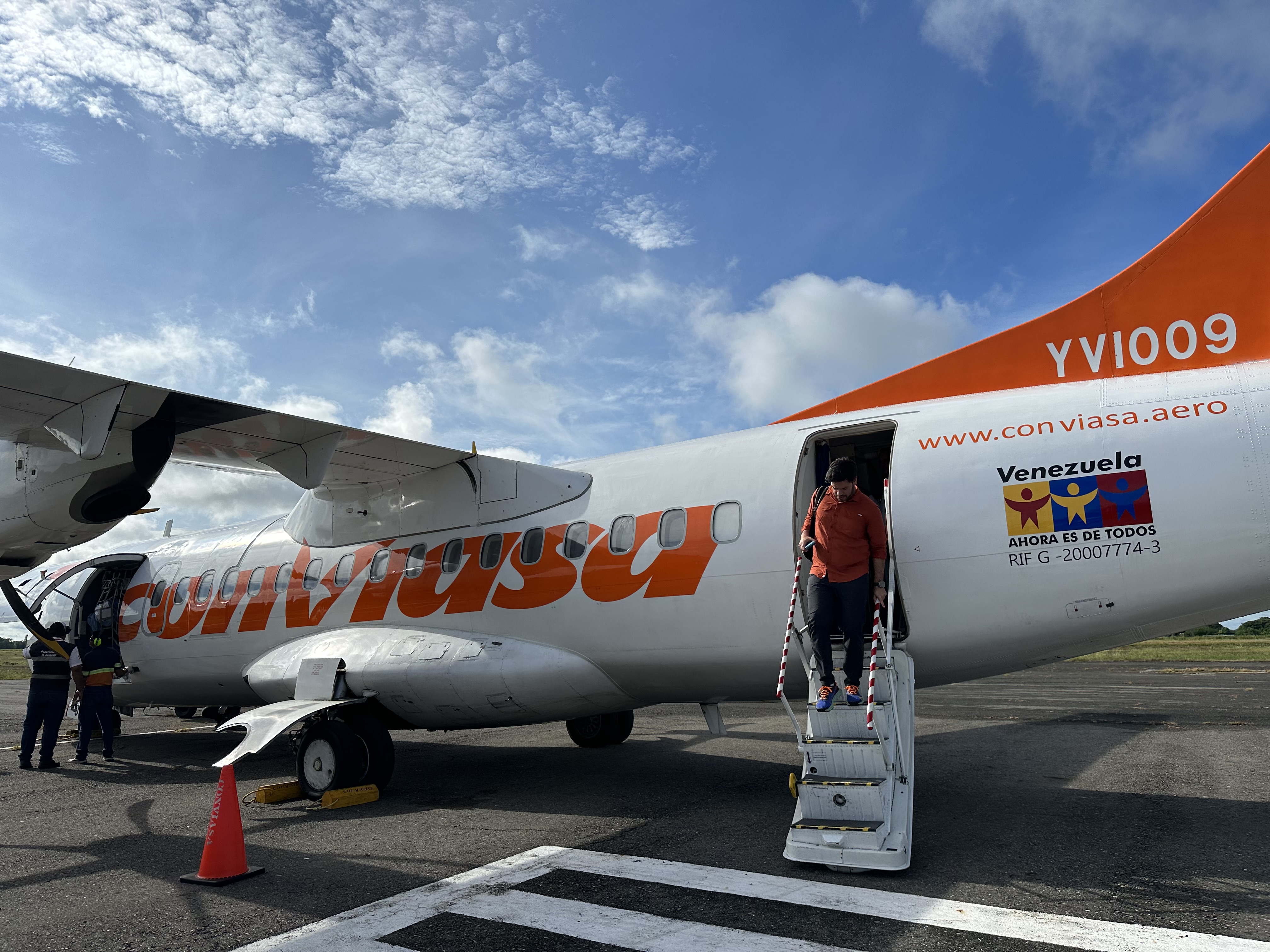
Travelling in Venezuela, Camaguan, Venezuela, October 2023
Soon, I will travel again within Venezuela.
There is something about field visits that stirs a particular kind of anticipation — not the excitement of airports or distant horizons, but something deeper and steadier. A return to the ground. To the dust. To the schools and clinics and community halls where plans on paper take tangible form.
In a few days, I will head south, leaving Caracas early in the morning and travelling by road for many hours until the landscape opens into the vast plains of Apure. Long stretches of highway, two brief stops along the way, and then arrival in San Fernando. These journeys are never merely logistical; they are transitions. They allow the mind to slow, to shift from office conversations to the rhythm of communities.
The purpose of the visit is simple, yet essential: to see, to listen, to better understand how the activities we support unfold in practice. Meetings with local authorities, conversations with teachers and health staff, exchanges with community representatives — all part of ensuring that what we fund truly reaches those it is meant to serve.
One of the moments I most look forward to is visiting a school that, not long ago, stood empty. No students. No functioning facilities. Now its doors are open again. Classrooms that were silent hold voices once more. Desks and materials have been delivered. Teachers have received training. Water access has improved through the drilling of a well and installation of storage systems. Solar panels have been installed. Even school gardens are being cultivated — small but meaningful signs of continuity and dignity returning to daily life.
There will also be visits to protective spaces within schools — places designed not only for learning, but for safety and expression. Musical instruments, traditional clothing, educational materials — modest details perhaps, yet in communities that have faced isolation and hardship, such elements matter. They signal normality. They signal investment in the future.
In another community, discussions with local health authorities will focus on the broader situation — the pressures on services, the gaps that remain, the realities behind the statistics. These conversations are rarely dramatic. They are practical. Honest. At times sobering. But always necessary.
Field visits are not glamorous. They involve long drives, early breakfasts, dust on shoes, notebooks filled with observations. Feedback sessions in modest offices. Returning late in the afternoon, tired yet clearer about what works and what still needs attention.
And yet, these moments reconnect me most strongly with why this work matters.
Walking through classrooms, listening to teachers, speaking with community members, observing how infrastructure improvements translate into daily routine — this is where abstraction gives way to reality. Questions are asked. Notes are taken. Assumptions are tested against lived experience.
There is something profoundly grounding about standing where support becomes visible — where children sit at desks that were not there before, where water flows where it once did not, where attendance grows from zero to dozens within a year.
As my time in Venezuela gradually moves toward its final months, these visits carry a particular weight. They are not only moments of monitoring and evaluation, but of witnessing — of standing still long enough to understand what has changed, and what still requires patience.
The road south awaits.
The plains of Apure stretch wide and quiet.
In places like these, impact does not announce itself loudly. It appears in small, persistent shifts — a reopened classroom, a functioning water point, a teacher who stays, a student who returns.
This is where the abstract becomes real.
Where distance narrows.
Where purpose settles back into focus.
And perhaps that is why going back to the field always feels less like departure, and more like return.
When Access Narrows
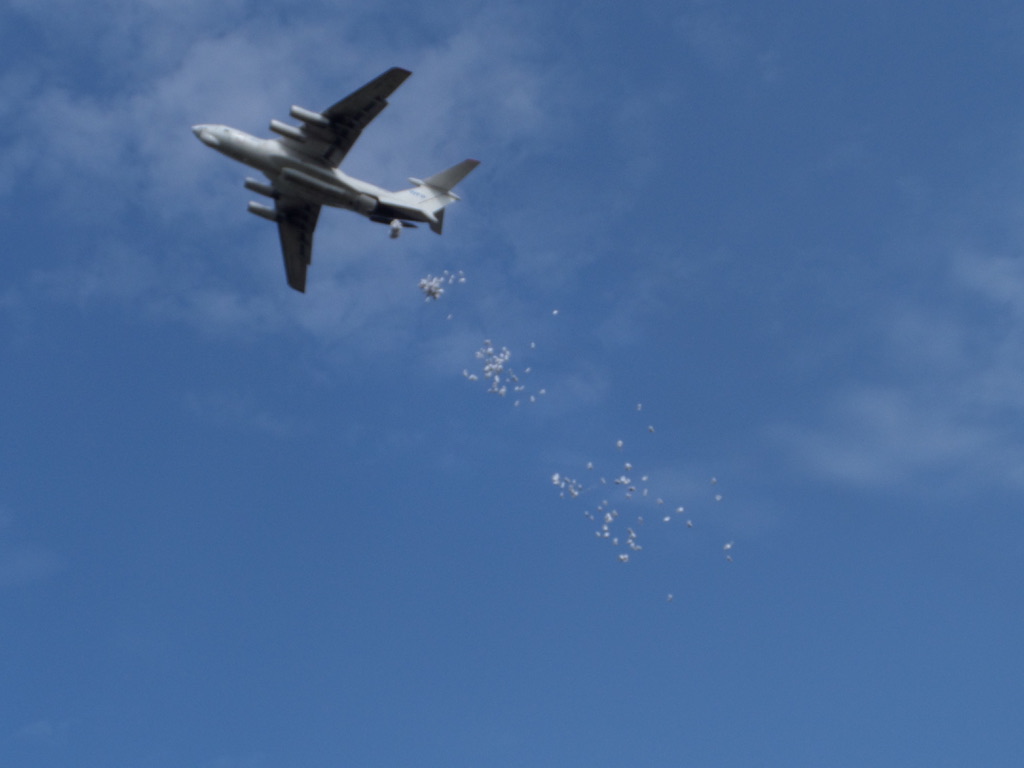
Humanitarian Food Drops, Juba, South Sudan, July 2014
Over the past days, the headlines from the Middle East have become heavier again.
Missiles. Retaliation. Escalation. New fronts opening. Borders tightening. Civilian casualties rising in Iran, Israel, Lebanon, Gaza. Words repeat themselves with disturbing familiarity, even as the geography expands.
As someone working in humanitarian response, I read these updates differently. Behind every headline I see not strategy, but people. Families who did not choose the timing of this escalation. Children who do not understand why sirens dictate their sleep. Elderly people who must once again decide what to carry and what to leave behind.
Civilians always pay first. And they pay longest.
What worries me deeply is how quickly humanitarian space begins to shrink when escalation accelerates. Border crossings close. Access routes become unsafe. Aid convoys are delayed. Communication lines collapse. What yesterday was difficult becomes nearly impossible today. And in that shrinking space, food deliveries stall, medical supplies run low, water systems fail, protection mechanisms weaken.
Humanitarian action depends on fragile conditions: access, dialogue, minimal security guarantees, respect for international humanitarian law. These conditions are rarely robust. They are negotiated, delicate, constantly tested. When military logic dominates, humanitarian logic struggles to breathe.
Diplomacy, too, becomes fragile. In moments of rapid escalation, trust erodes quickly, and once lost, it is not easily rebuilt. The space for quiet conversations — the kind that prevent further suffering — narrows. Yet it is precisely in these moments that such conversations matter most.
From Caracas, geographically far yet professionally close, I feel the weight of this familiar cycle. The Middle East does not experience crisis in isolation; instability echoes across regions, affecting economies, displacement patterns, political tensions far beyond immediate borders.
But at the centre of it all are not geopolitical calculations.
At the centre are people waiting for crossings to reopen. Patients hoping electricity will hold in hospitals. Parents trying to create normality in abnormal days. Aid workers attempting to operate in environments where security assurances shift by the hour.
This is not a political reflection. It is a human one.
Escalation always feels sudden. Human consequences are never sudden. They accumulate quietly, day after day, long after media attention shifts elsewhere.
In times like this, I find myself returning to something simple: the reminder that humanitarian space must be defended not as a political position, but as a human necessity. Civilians deserve protection. Aid must reach those who need it. Dialogue must remain possible.
These are fragile principles.
But they are not optional ones.

June 2026
May 2026
April 2026
March 2026
February 2026
January 2026
December 2025
November 2025
October 2025
September 2025
August 2025
July 2025
June 2025
May 2025
April 2025
March 2025
February 2025
January 2025
December 2024
November 2024
October 2024
September 2024
August 2024
July 2024
June 2024
May 2024
April 2024
March 2024
February 2024
January 2024
December 2023
November 2023
October 2023
September 2023
August 2023
July 2023
June 2023
May 2023
April 2023
March 2023
February 2023
January 2023
December 2022
November 2022
October 2022
September 2022
August 2022
July 2022
June 2022
May 2022
April 2022
March 2022
February 2022
January 2022
December 2021
November 2021
October 2021
September 2021
August 2021
July 2021
June 2021
May 2021
April 2021
March 2021
February 2021
January 2021
December 2020
November 2020
October 2020
September 2020
August 2020
July 2020
June 2020
May 2020
April 2020
March 2020
February 2020
January 2020
December 2019
November 2019
October 2019
September 2019
August 2019
July 2019
June 2019
May 2019
April 2019
March 2019
February 2019
January 2019
December 2018
November 2018