When Access Narrows
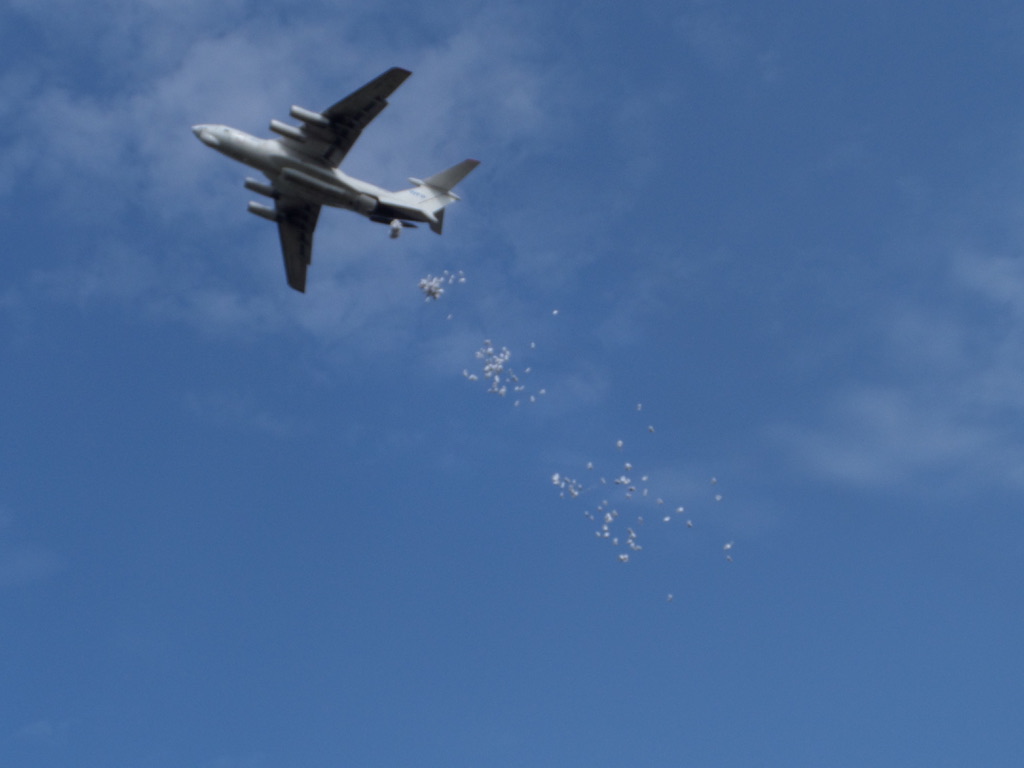
Humanitarian Food Drops, Juba, South Sudan, July 2014
Over the past days, the headlines from the Middle East have become heavier again.
Missiles. Retaliation. Escalation. New fronts opening. Borders tightening. Civilian casualties rising in Iran, Israel, Lebanon, Gaza. Words repeat themselves with disturbing familiarity, even as the geography expands.
As someone working in humanitarian response, I read these updates differently. Behind every headline I see not strategy, but people. Families who did not choose the timing of this escalation. Children who do not understand why sirens dictate their sleep. Elderly people who must once again decide what to carry and what to leave behind.
Civilians always pay first. And they pay longest.
What worries me deeply is how quickly humanitarian space begins to shrink when escalation accelerates. Border crossings close. Access routes become unsafe. Aid convoys are delayed. Communication lines collapse. What yesterday was difficult becomes nearly impossible today. And in that shrinking space, food deliveries stall, medical supplies run low, water systems fail, protection mechanisms weaken.
Humanitarian action depends on fragile conditions: access, dialogue, minimal security guarantees, respect for international humanitarian law. These conditions are rarely robust. They are negotiated, delicate, constantly tested. When military logic dominates, humanitarian logic struggles to breathe.
Diplomacy, too, becomes fragile. In moments of rapid escalation, trust erodes quickly, and once lost, it is not easily rebuilt. The space for quiet conversations — the kind that prevent further suffering — narrows. Yet it is precisely in these moments that such conversations matter most.
From Caracas, geographically far yet professionally close, I feel the weight of this familiar cycle. The Middle East does not experience crisis in isolation; instability echoes across regions, affecting economies, displacement patterns, political tensions far beyond immediate borders.
But at the centre of it all are not geopolitical calculations.
At the centre are people waiting for crossings to reopen. Patients hoping electricity will hold in hospitals. Parents trying to create normality in abnormal days. Aid workers attempting to operate in environments where security assurances shift by the hour.
This is not a political reflection. It is a human one.
Escalation always feels sudden. Human consequences are never sudden. They accumulate quietly, day after day, long after media attention shifts elsewhere.
In times like this, I find myself returning to something simple: the reminder that humanitarian space must be defended not as a political position, but as a human necessity. Civilians deserve protection. Aid must reach those who need it. Dialogue must remain possible.
These are fragile principles.
But they are not optional ones.

May 2026
April 2026
March 2026
February 2026
January 2026
December 2025
November 2025
October 2025
September 2025
August 2025
July 2025
June 2025
May 2025
April 2025
March 2025
February 2025
January 2025
December 2024
November 2024
October 2024
September 2024
August 2024
July 2024
June 2024
May 2024
April 2024
March 2024
February 2024
January 2024
December 2023
November 2023
October 2023
September 2023
August 2023
July 2023
June 2023
May 2023
April 2023
March 2023
February 2023
January 2023
December 2022
November 2022
October 2022
September 2022
August 2022
July 2022
June 2022
May 2022
April 2022
March 2022
February 2022
January 2022
December 2021
November 2021
October 2021
September 2021
August 2021
July 2021
June 2021
May 2021
April 2021
March 2021
February 2021
January 2021
December 2020
November 2020
October 2020
September 2020
August 2020
July 2020
June 2020
May 2020
April 2020
March 2020
February 2020
January 2020
December 2019
November 2019
October 2019
September 2019
August 2019
July 2019
June 2019
May 2019
April 2019
March 2019
February 2019
January 2019
December 2018
November 2018