Choroní and the Coast of Aragua 🇻🇪
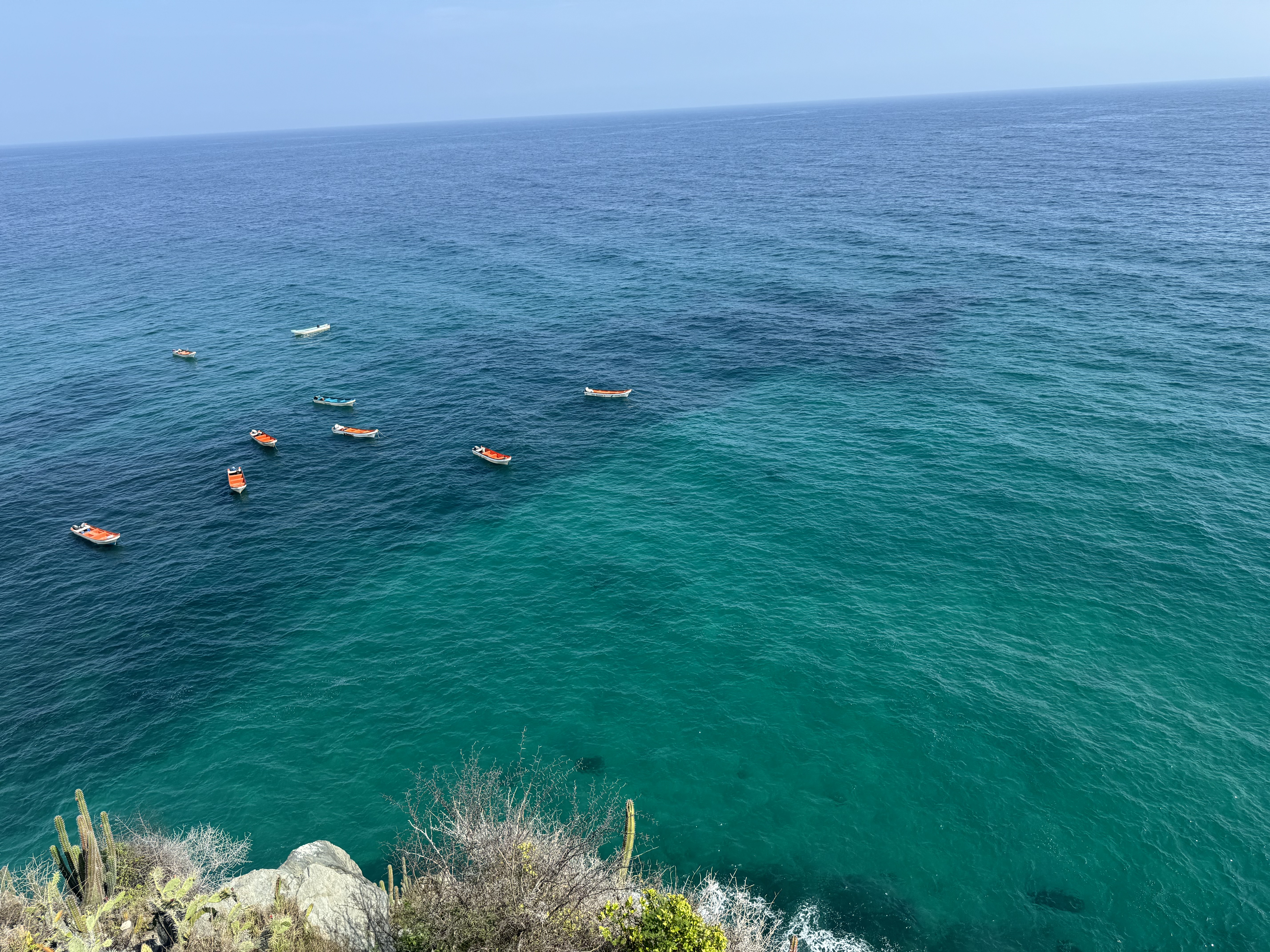
Puerto Colombia, Venezuela, April 2026
I have just returned from a long weekend in Choroní.
One of those trips that begins simply — a drive out of Caracas — and slowly unfolds into something much richer. It was made all the more special by travelling with Giovanni and his family, Mayling and Samantha. There is a particular warmth in sharing a journey like this, where the road itself becomes part of the experience, and every stop carries its own story.
From Caracas to the coast
We set off early, heading west toward Maracay, the gateway to the coast.
By the time we reached the city, hunger had settled in properly, and we stopped for what was meant to be a simple late lunch. It turned into something much more memorable — generous plates, flavours that lingered, the kind of meal that anchors a journey before it truly begins.
Then the road changed.
Leaving Maracay behind, we began the climb through Henri Pittier National Park, the oldest national park in Venezuela, established in 1937 to protect its extraordinary ecosystems. The road twisted and turned, narrow and patient, rising into cloud forest and descending again toward the sea.
This part felt almost unreal.
Bamboo rose high on either side, forming natural tunnels. Dense jungle pressed close to the road — layers of green upon green, alive with movement even when still. Mist hovered in places, light filtered through leaves in unexpected ways. It is one of those landscapes that does not need to announce itself; it simply surrounds you completely.
The descent toward the coast was sudden and beautiful — mountains opening, glimpses of the Caribbean appearing between trees.
Puerto Colombia — arrival by the sea
We reached Puerto Colombia in the late afternoon, just as the rhythm of the fishing village was shifting.
At the port, fishermen were returning.
Boats pulled in one by one, painted in bright colours, their engines cutting through the quiet. Nets were gathered, fish sorted, voices carried across the water. It was work, but it had a certain choreography to it — practiced, unspoken, passed down over generations. Fishing, alongside cacao and small-scale tourism, remains at the heart of life here.
We stood there for a while, simply watching.
Climbing above the town
The next morning began with exploration.
We walked through Puerto Colombia, then climbed toward the mirador, where the view opens suddenly — the ocean stretching outward, the mountains rising sharply behind, and the town held gently between them. It is a place defined by contrast: jungle and sea, isolation and openness, stillness and movement.
From above, everything felt balanced.
By boat along the coast
Later, we set off by boat — a small, fast fishing vessel cutting across the water.
The coastline revealed itself in fragments: hidden beaches, cliffs covered in dense vegetation, stretches of untouched sand that can only be reached this way. Much of this coast remains inaccessible by road, preserved by the geography of the mountains themselves.
Our first stop was Cepe.
Cepe felt almost suspended in time. The beach was wide, sunlit, nearly empty. The water carried that deep, inviting blue that makes you forget everything else for a while. There are places where you arrive, and without thinking, you slow down — this was one of them.
On the way back, we stopped in Chuao, a place that feels both remote and deeply rooted in history. Founded in the 17th century and surrounded by rainforest and sea, it is accessible only by boat, which has helped preserve its unique character.
Chuao is known for producing some of the finest cocoa in the world, cultivated here for over 400 years. Walking through the village, you feel that continuity — cocoa beans drying in the sun, the scent of fermentation, the quiet labour that transforms something simple into something extraordinary.
We explored the village in the back of a truck and on foot, moving between houses, plantations, and the beach. Lunch, naturally, was fish — fresh, simple, perfect for the setting.
Evening rhythms
Back in Puerto Colombia, the evening unfolded gently.
Small shops opened, music drifted through the streets, restaurants filled slowly. The village comes alive in its own way after sunset — not loud, not overwhelming, just present. Conversations linger, time stretches slightly, and the sea remains close, even when unseen.
The return
The next morning, we began the journey back.
Before leaving the coast, we stopped in Choroní, the historic village just inland, with its colourful houses and colonial roots dating back to the early Spanish settlements of the 17th century. Narrow streets, simple façades, a quiet sense of history — it felt like a place that has adapted without losing itself.
Crossing the mountains again, the jungle seemed even more vivid on the return.
We paused once more in Maracay, this time for a walk through Plaza Bolívar Maracay, and then for lunch at an Italian restaurant that felt almost indulgent after days by the sea. It was one of those meals where you realise how journeys carry contrasts — simplicity and comfort, sun and shade, movement and pause.
What stayed
This was not a long trip.
But it was full.
Of landscapes that felt almost unreal.
Of conversations that came easily.
Of places shaped by history, by labour, by patience.
Of small, quiet moments that stay longer than expected.
Choroní and the coast of Aragua do not try to impress.
They simply exist — intensely, beautifully, honestly.
And for a few days, that was more than enough.
Click here to access the album.

List to links of all albums available in 'Google Pictures'
June 2026
May 2026
April 2026
March 2026
February 2026
January 2026
December 2025
November 2025
May 2025
April 2025
March 2025
December 2024
November 2024
June 2024
May 2024
February 2024
January 2024
December 2023
November 2023
October 2023
September 2023
August 2023
July 2023
June 2023
May 2023
April 2023
March 2023
February 2023
January 2023
December 2022
November 2022
October 2022
September 2022
August 2022
July 2022
June 2022
May 2022
April 2022
March 2022
December 2021
November 2021
October 2021
September 2021
August 2021
July 2021
June 2021
March 2021
February 2021
January 2021
October 2020
September 2020
January 2020
December 2019
November 2019
August 2019
July 2019
June 2019
May 2019
April 2019
March 2019
February 2019
January 2019
December 2018